
Zapier · 0→1 product
AI automation
for everyone.
Creating an AI companion that helps knowledge workers turn intent into useful software—without requiring them to think like software builders.
- Challenge
- Make automation approachable beyond technical teams
- Contribution
- Product direction, interaction model, prototyping
- Scope
- New product concept and end-to-end system
01 · The opportunity
Move the abstraction closer to the work.
Automation products usually ask people to translate their work into triggers, actions, fields, and logic before they can get value. That model is powerful, but it puts the burden of understanding the system on the person using it.
This project explored a different starting point: an AI companion that can understand intent, gather context, and shape itself around the job someone is trying to do. The product would still create dependable automation underneath, but the experience above it would feel more like working with a capable partner.
The product should meet people in the language of their work, then reveal structure only when it helps.
02 · Start with intent
Personalize before asking people to build.
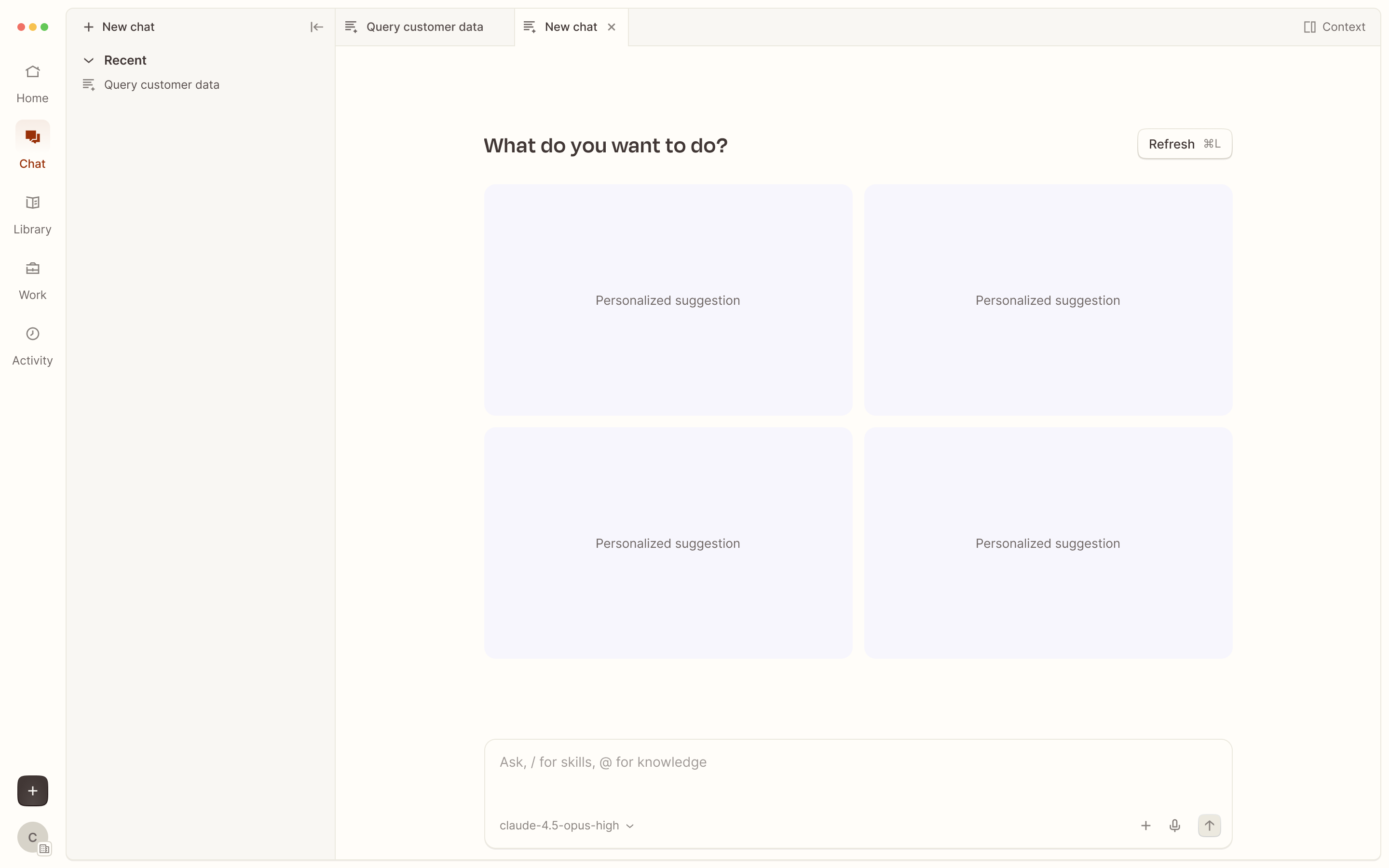
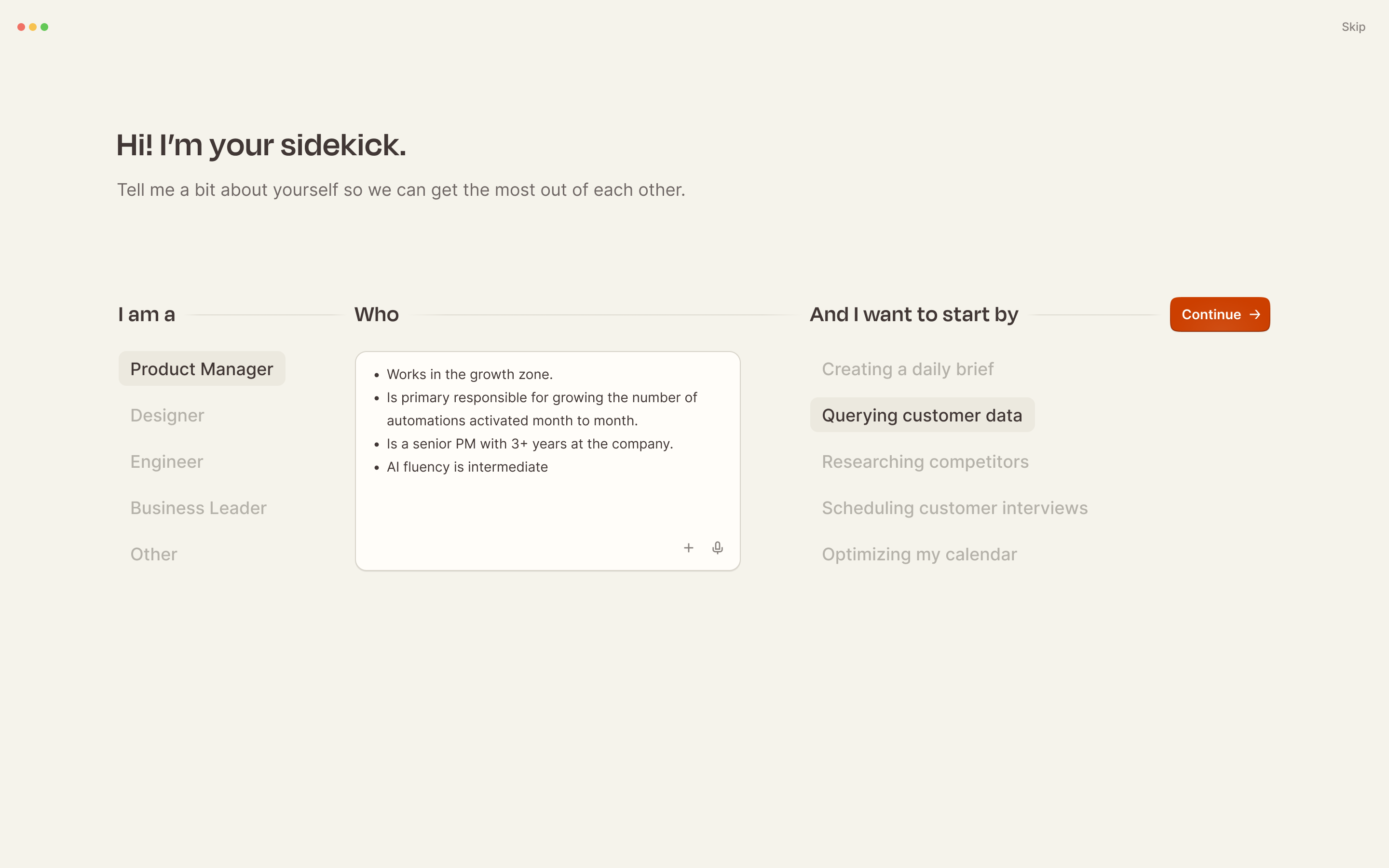
The first-run experience establishes a working relationship. Instead of a blank canvas or a catalog of templates, the companion asks about role, context, and the work someone wants to improve.
That lightweight conversation creates useful constraints. It gives the system enough signal to propose relevant starting points while making the value of personalization visible to the user.
03 · Build together
Let conversation create real structure.
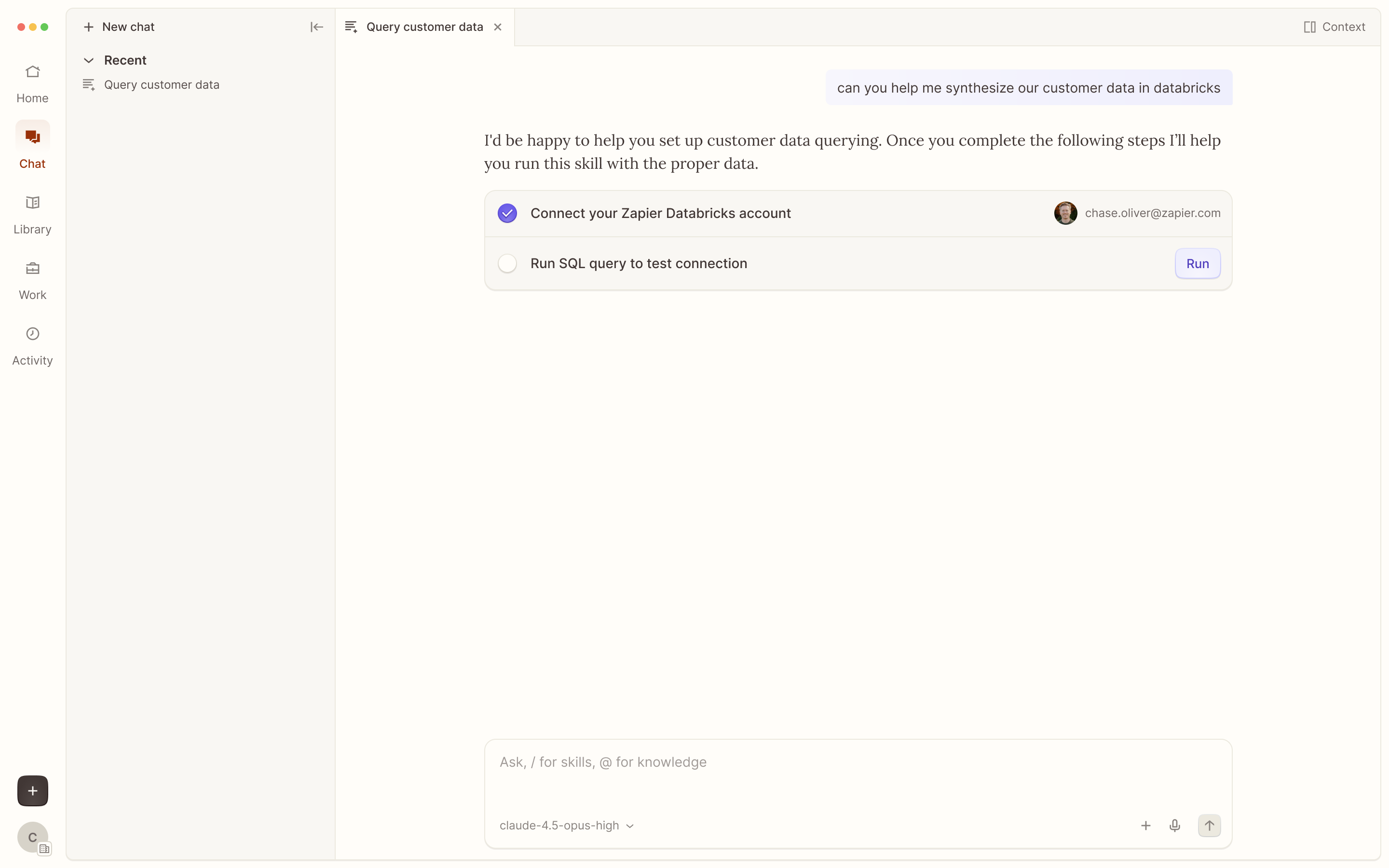
The companion does more than answer questions. It proposes actions, asks for access when needed, and turns the conversation into an executable system. People can stay focused on the outcome while still seeing and controlling what the product is doing.
The interface separates discussion from the evolving artifact without making them feel disconnected. Context remains available, actions are explicit, and each step can be inspected before it runs.
04 · A flexible surface
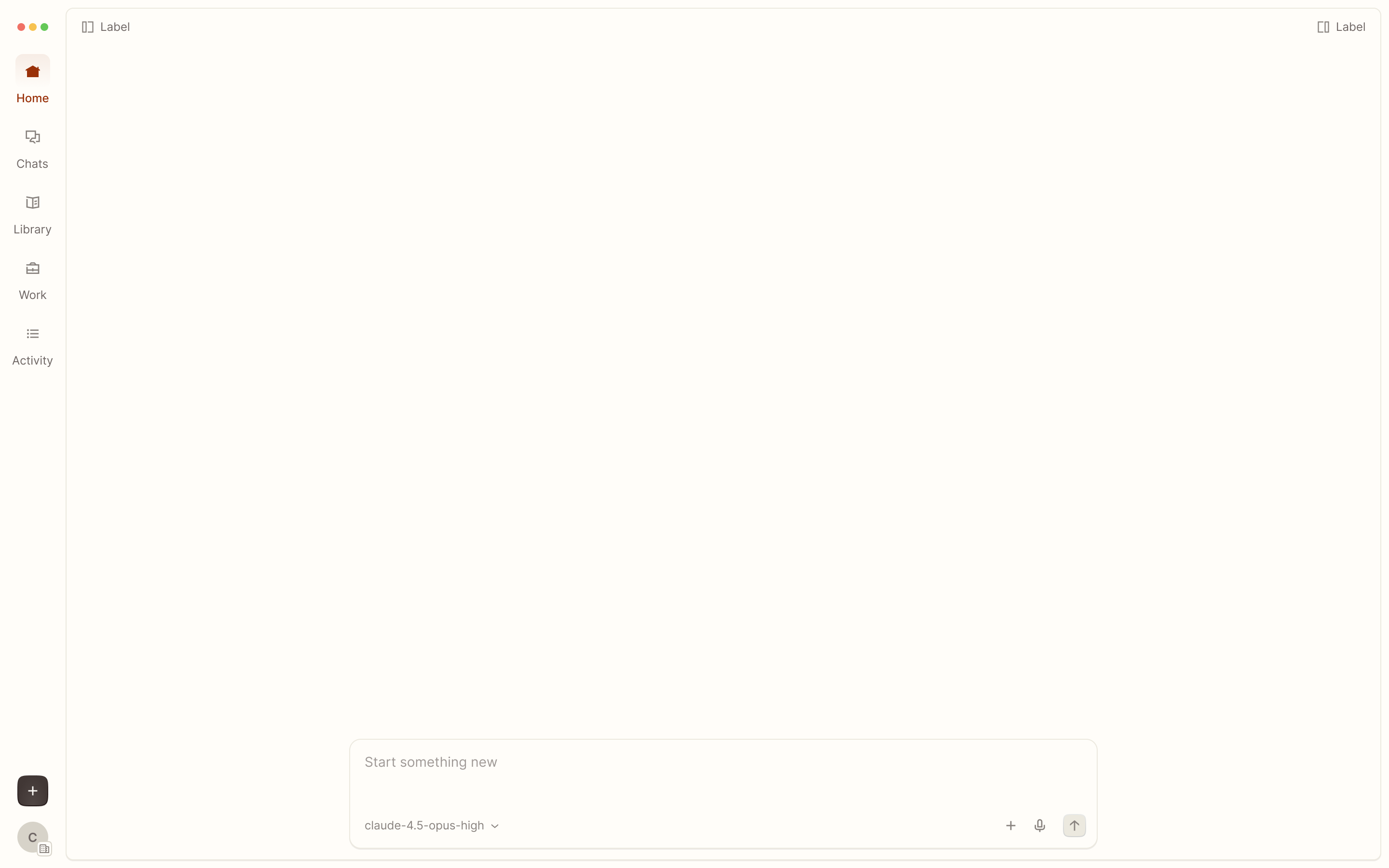
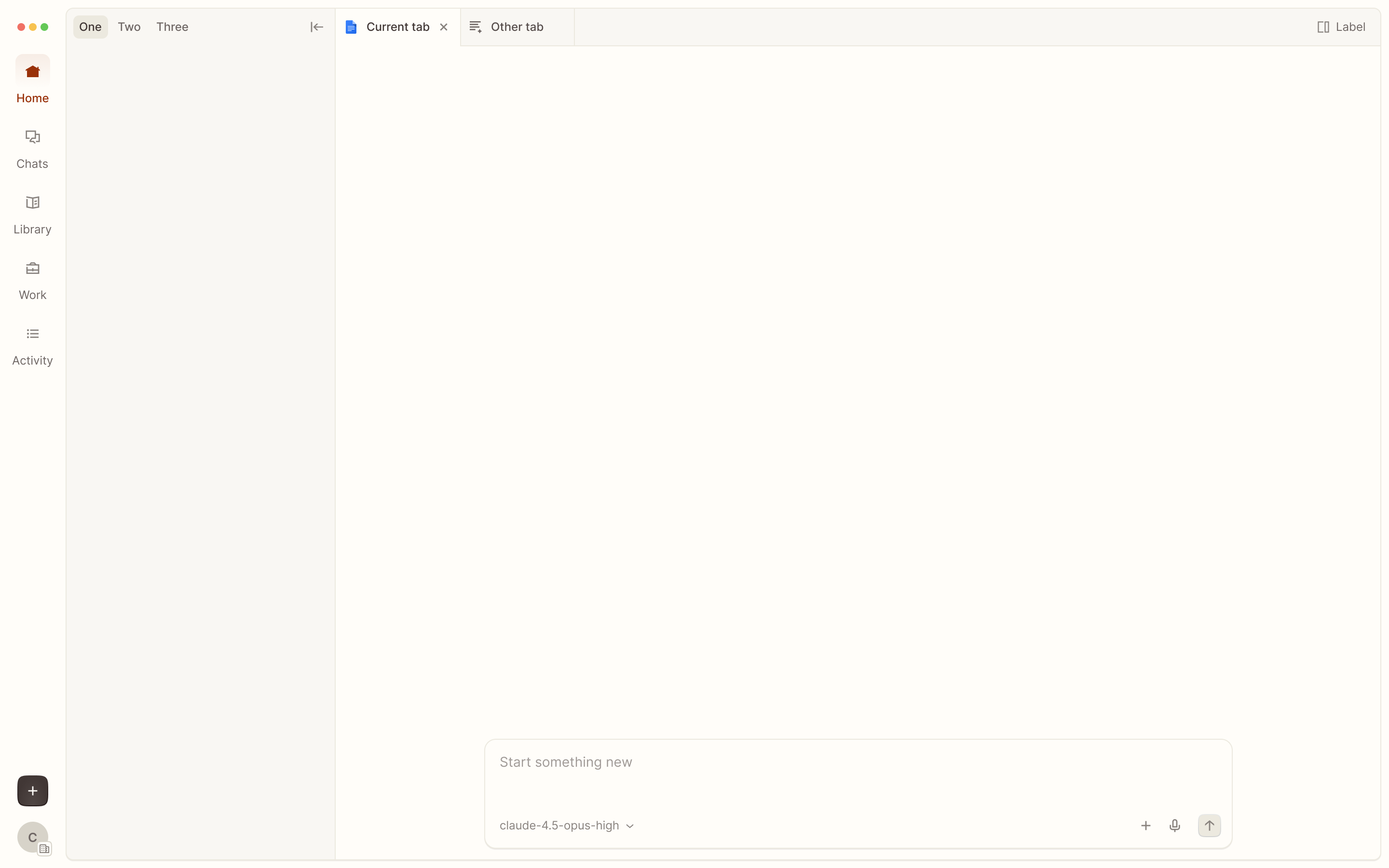
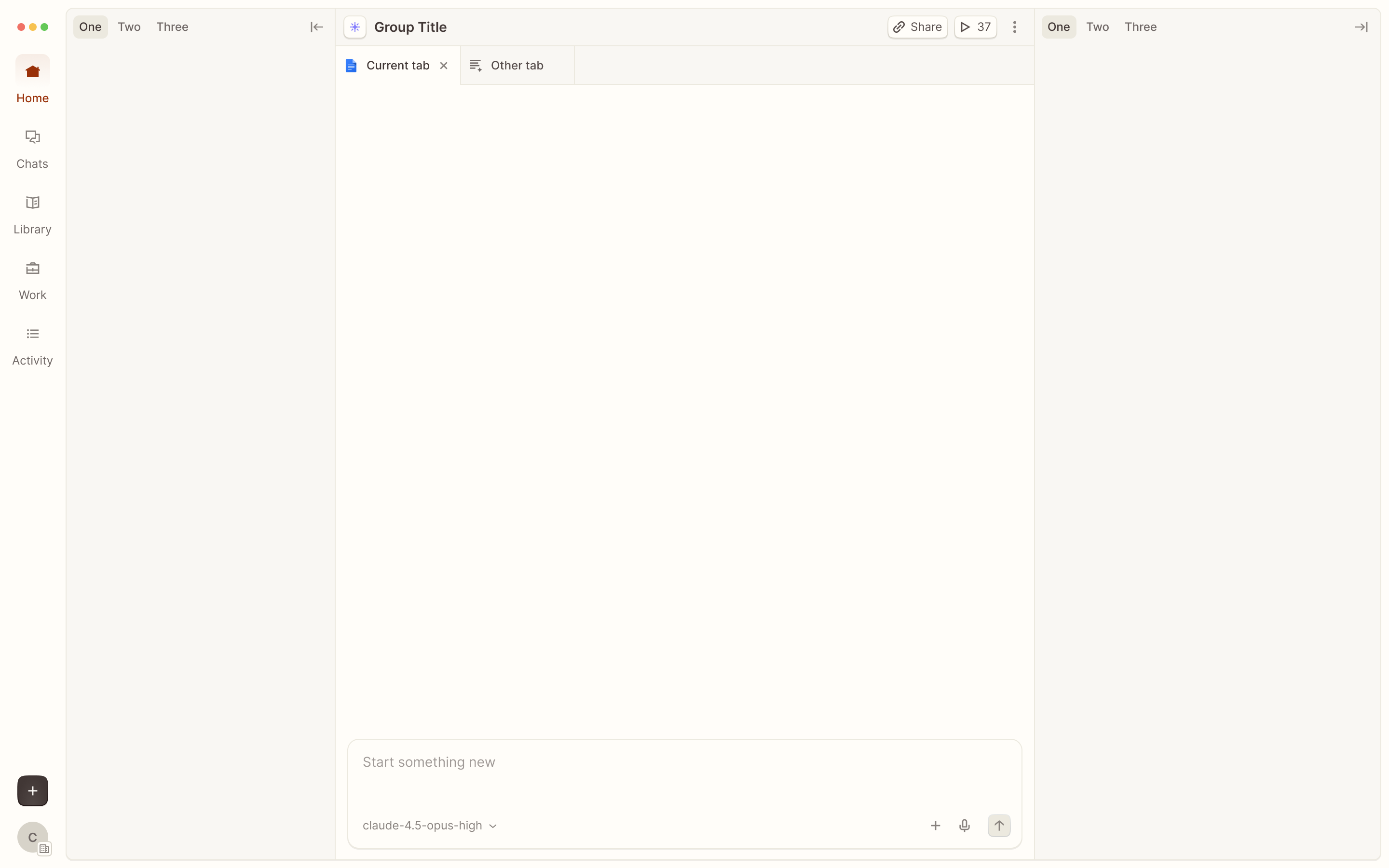
Let the workspace expand with the task.
Knowledge work shifts constantly between asking, reviewing, editing, and organizing. A fixed chat window is too narrow, while a traditional builder introduces more interface than many tasks need.
The workspace therefore moves through compact, balanced, and focused states. The companion can stay out of the way, share the screen with an artifact, or become the primary surface when the conversation needs attention.
05 · A system, not a chat
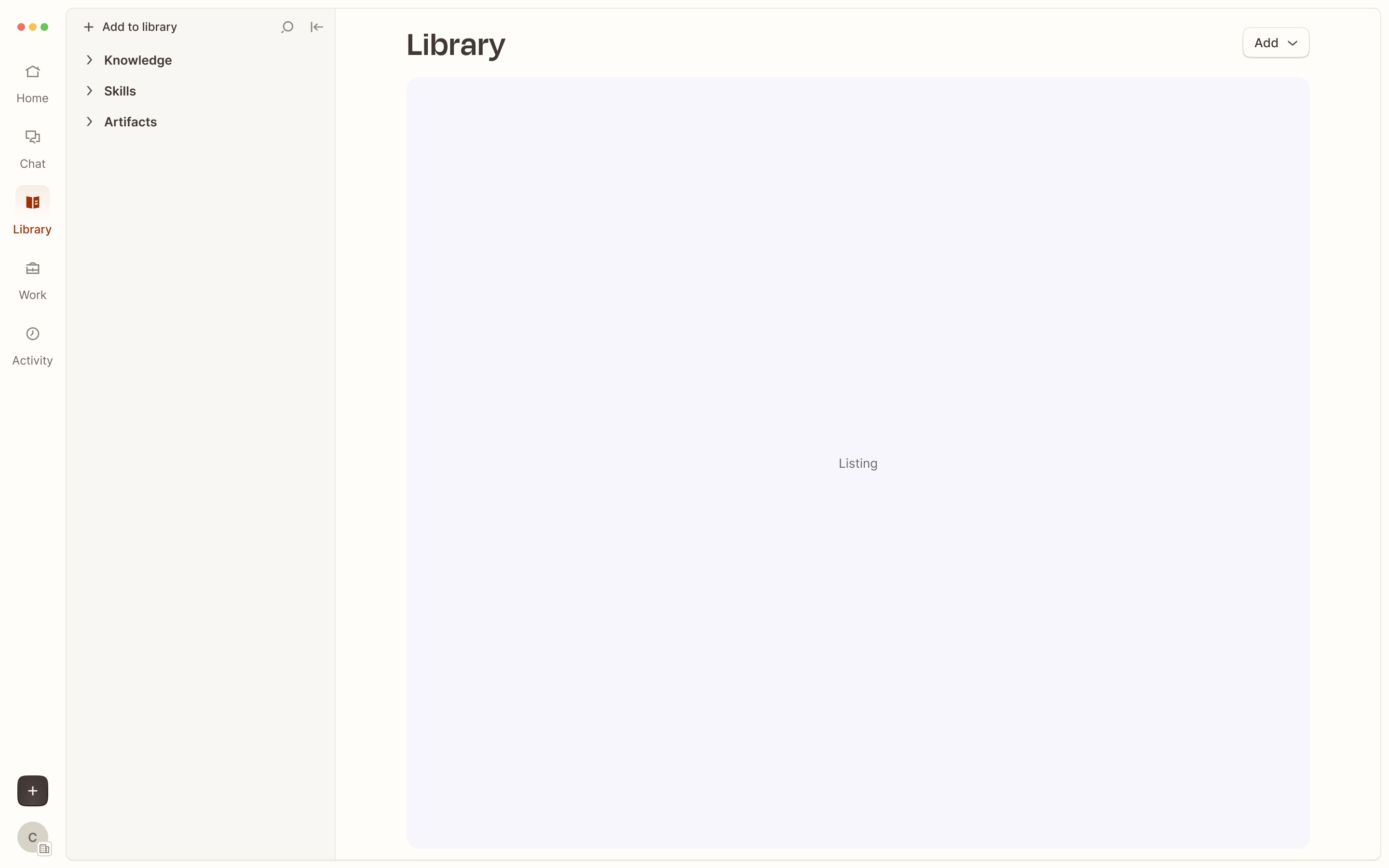
Give the work a durable home.
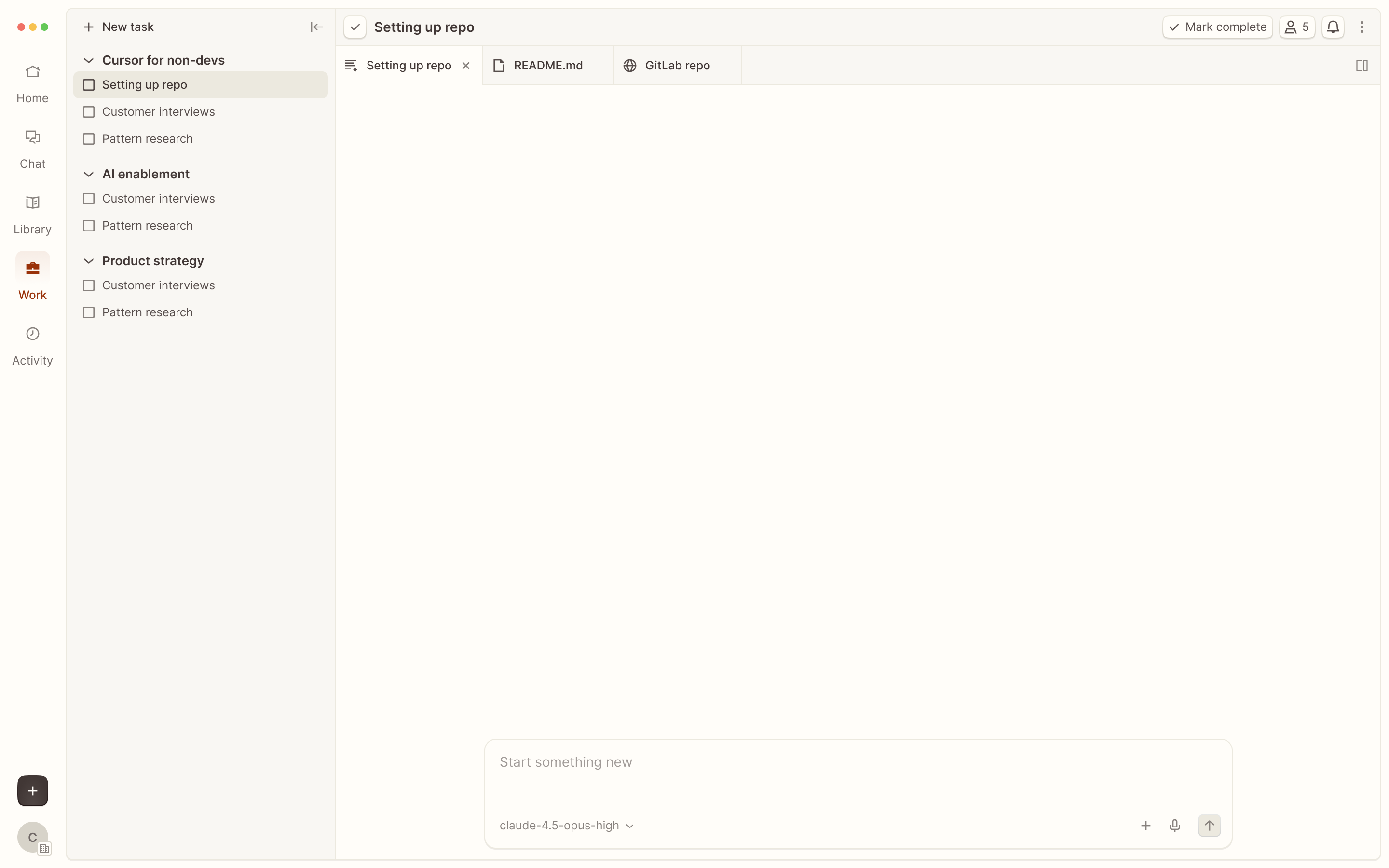
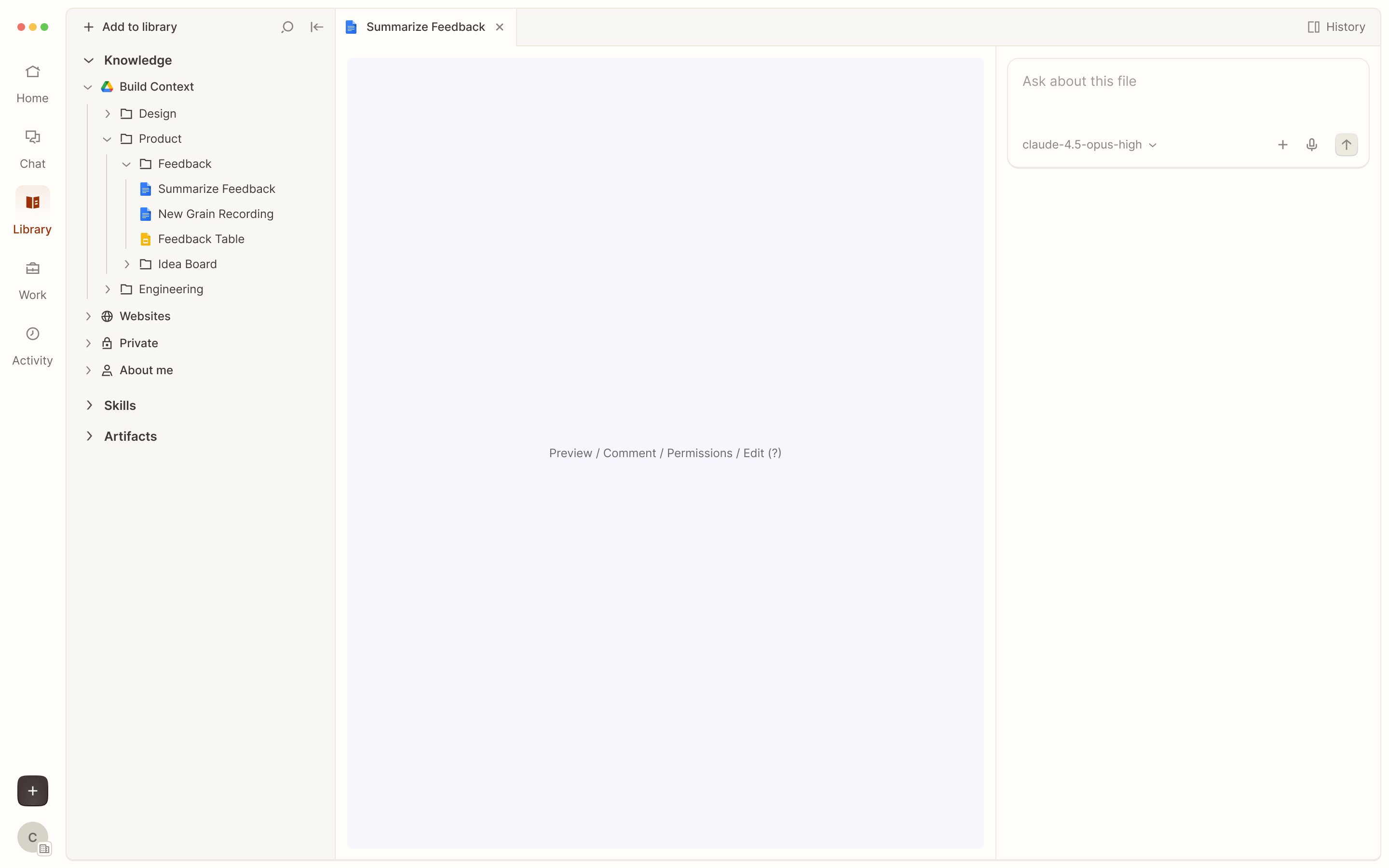
Useful output cannot disappear into a conversation history. The library gives generated knowledge, reusable skills, and working artifacts a persistent structure. Individual files can combine content with an active companion that understands the material in view.
This turns the concept from a chat experience into a new software model: the system can create, organize, and operate on the artifacts that make up someone’s work.
06 · What the concept established
A new way of building software at the company.
The concept reframed automation as an ongoing collaboration rather than a one-time configuration task. It connected conversational input to visible, durable artifacts and gave the companion permission to adapt its interface to the work at hand.
Most importantly, it made a complex platform capability feel relevant to knowledge workers who may never describe themselves as builders—even though they redesign how work gets done every day.
- 01Begin with outcomes, not product vocabulary.
- 02Make AI action visible, inspectable, and reversible.
- 03Preserve useful output beyond the conversation.
Have a complex product problem?