
Zapier · Platform systems
AI patterns across
the platform.
Identifying, defining, and delivering a shared interaction language that helps teams bring trustworthy AI experiences into their product surfaces.
- Challenge
- Create coherence while AI capabilities evolve quickly
- Contribution
- Pattern strategy, interaction design, system definition
- Scope
- Cross-platform patterns and implementation guidance
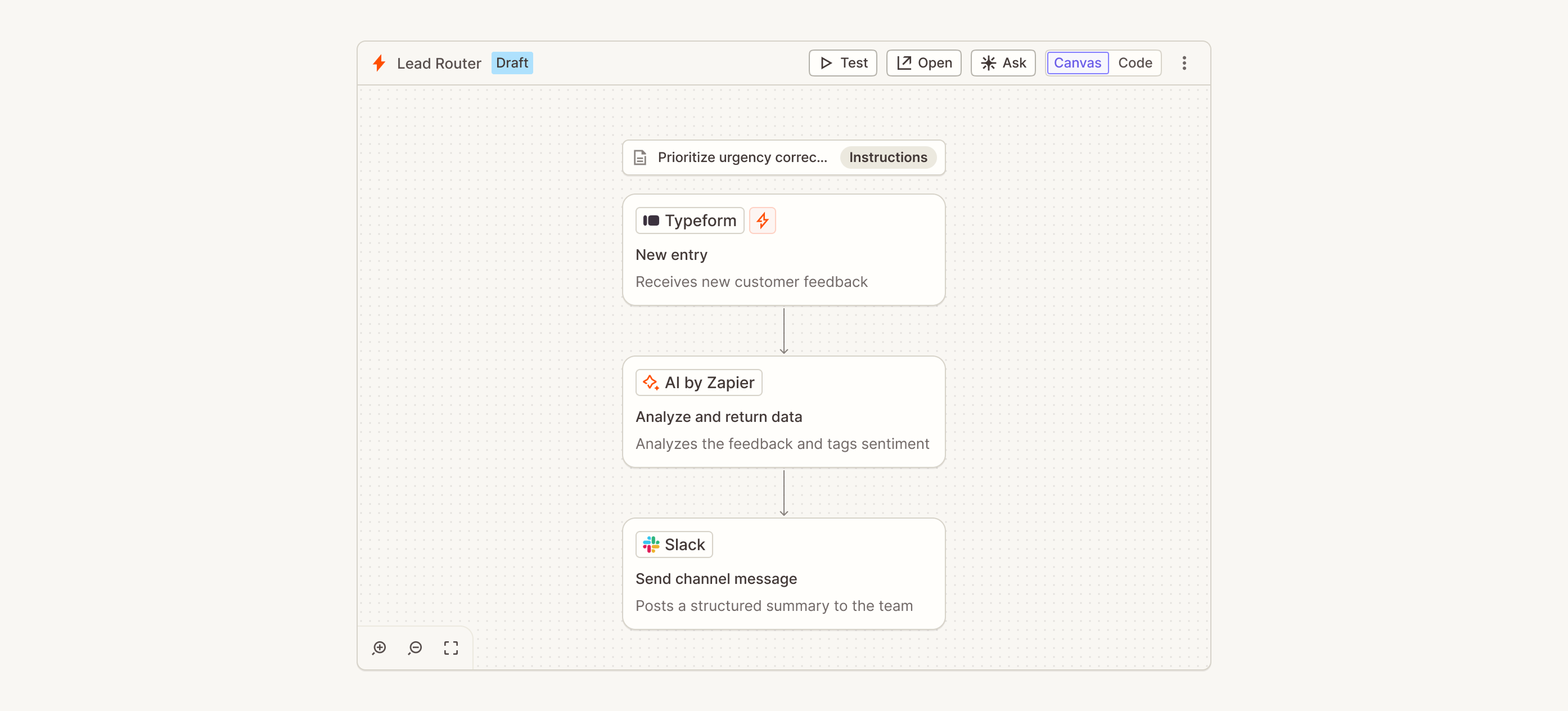
01 · The systems problem
Move quickly without teaching a new language on every screen.
As teams introduced AI across the platform, similar needs appeared in different forms: people had to ask, wait, review, refine, approve, and understand what the system was doing. Solving each need locally could ship quickly, but it also risked fragmented behavior and uneven trust.
The work focused on finding the stable interaction patterns beneath changing AI capabilities. The goal was not to force every experience into one component. It was to give teams a shared grammar they could adapt without making the product feel inconsistent.
A pattern should remove decisions teams should not need to remake—while preserving the decisions that make their experience specific.
02 · A common entry point
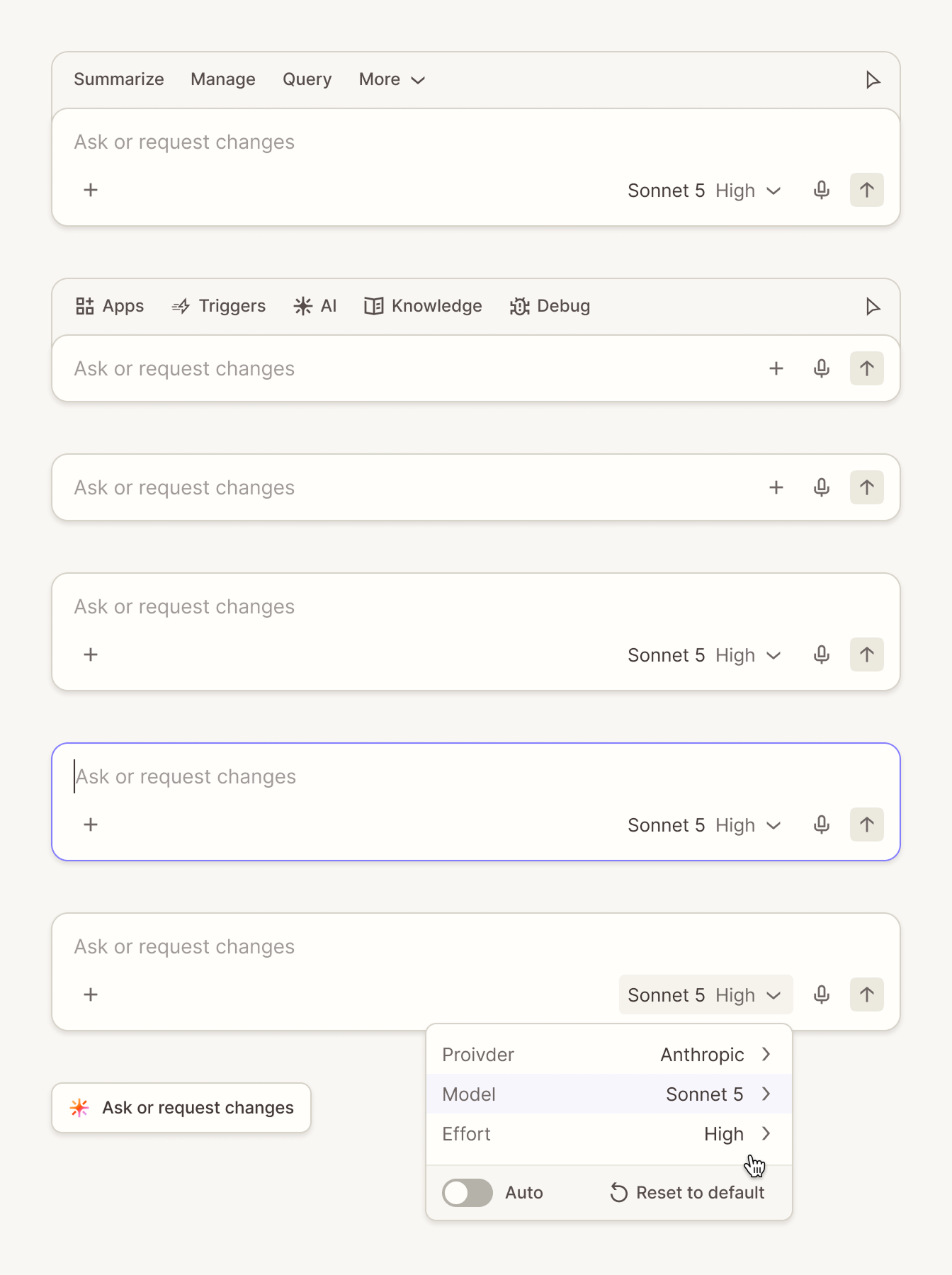
Make the composer flexible enough to travel.
The composer became the connective tissue across experiences. Its job was larger than accepting a prompt: it had to support relevant context, product actions, voice input, model settings, and moments when the product needed to suggest the next move.
A composable structure let teams use the same behavioral foundation at different sizes and levels of complexity. The result could feel native to each surface while preserving familiar controls and expectations.
03 · Make progress legible
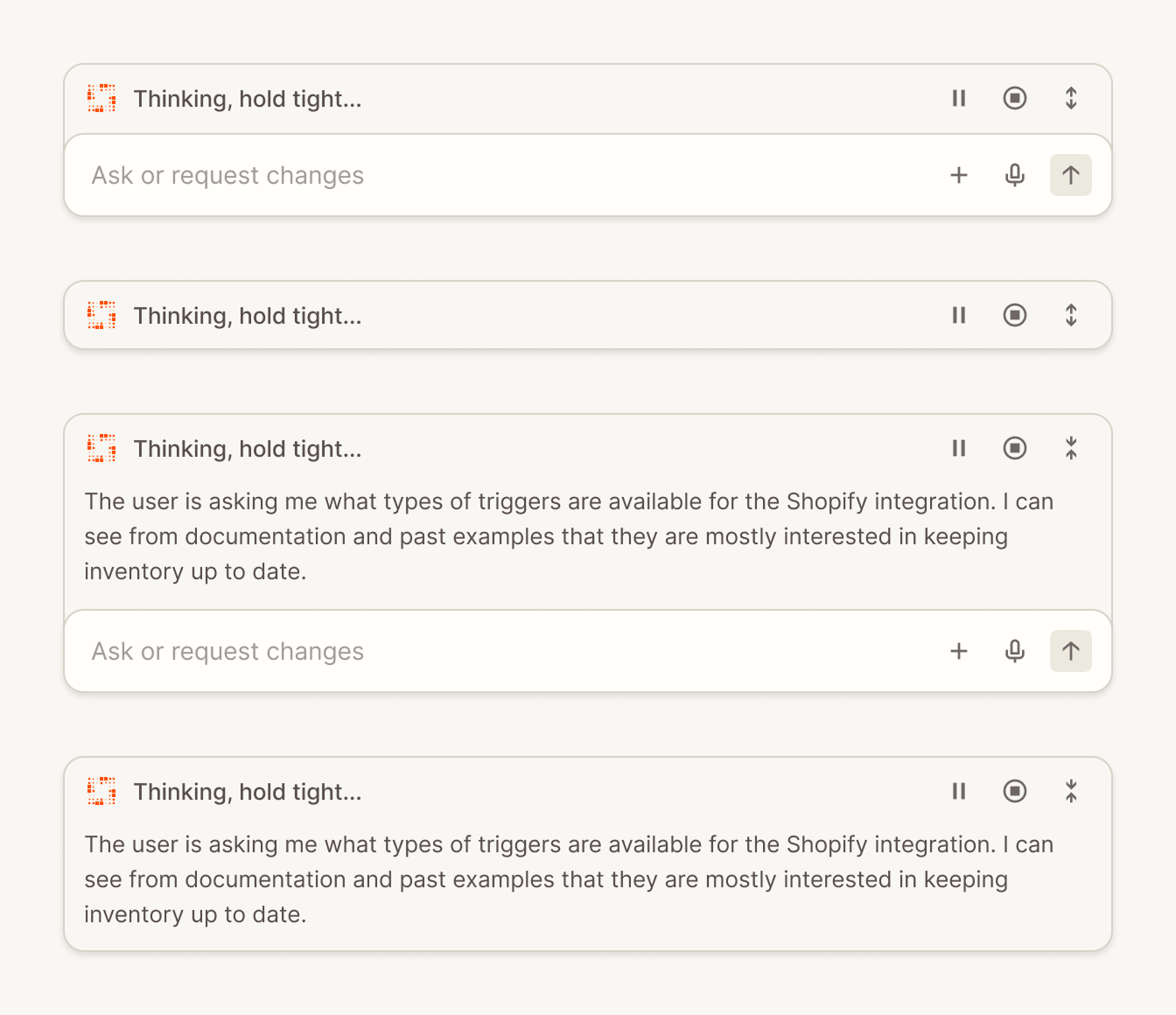
Replace the indefinite wait with useful state.
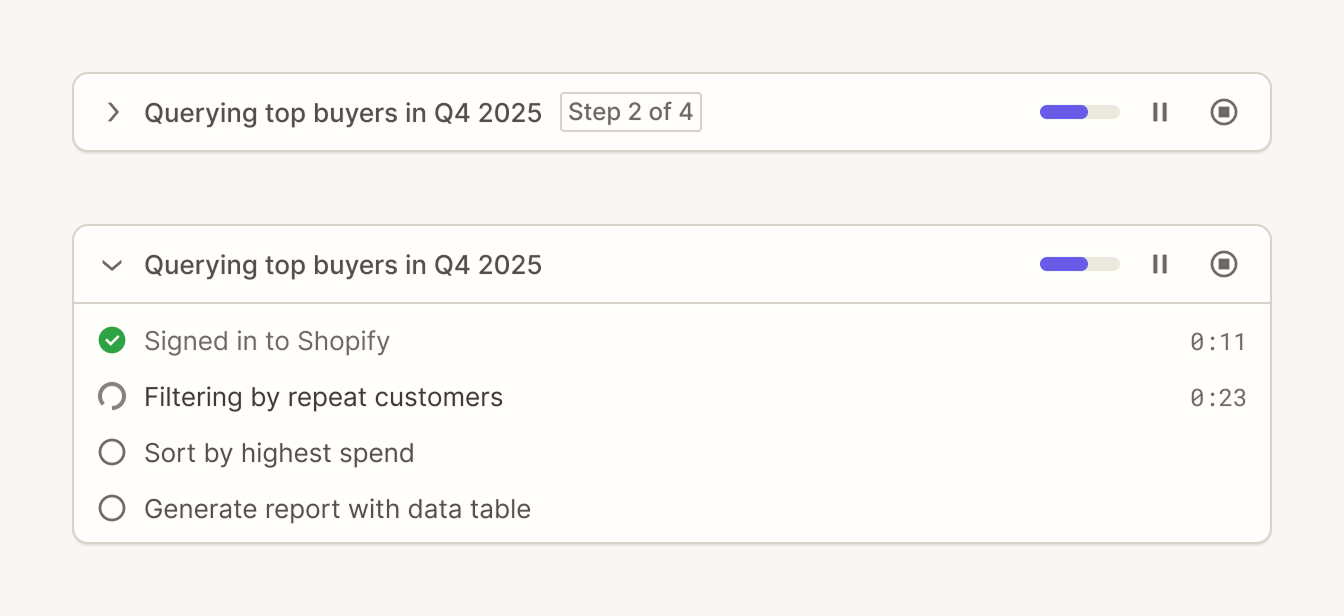
AI work can take time and the path is not always predictable. A generic loading indicator hides too much; raw system activity exposes too much. The pattern needed to communicate progress at the level someone could understand and act on.
Thinking states reveal concise, relevant activity. Checklists provide a durable model for longer multi-step work, including completed, active, and upcoming steps. Both patterns preserve a sense of momentum without pretending the system is more certain than it is.
04 · Control at the right moment
Match human involvement to consequence.
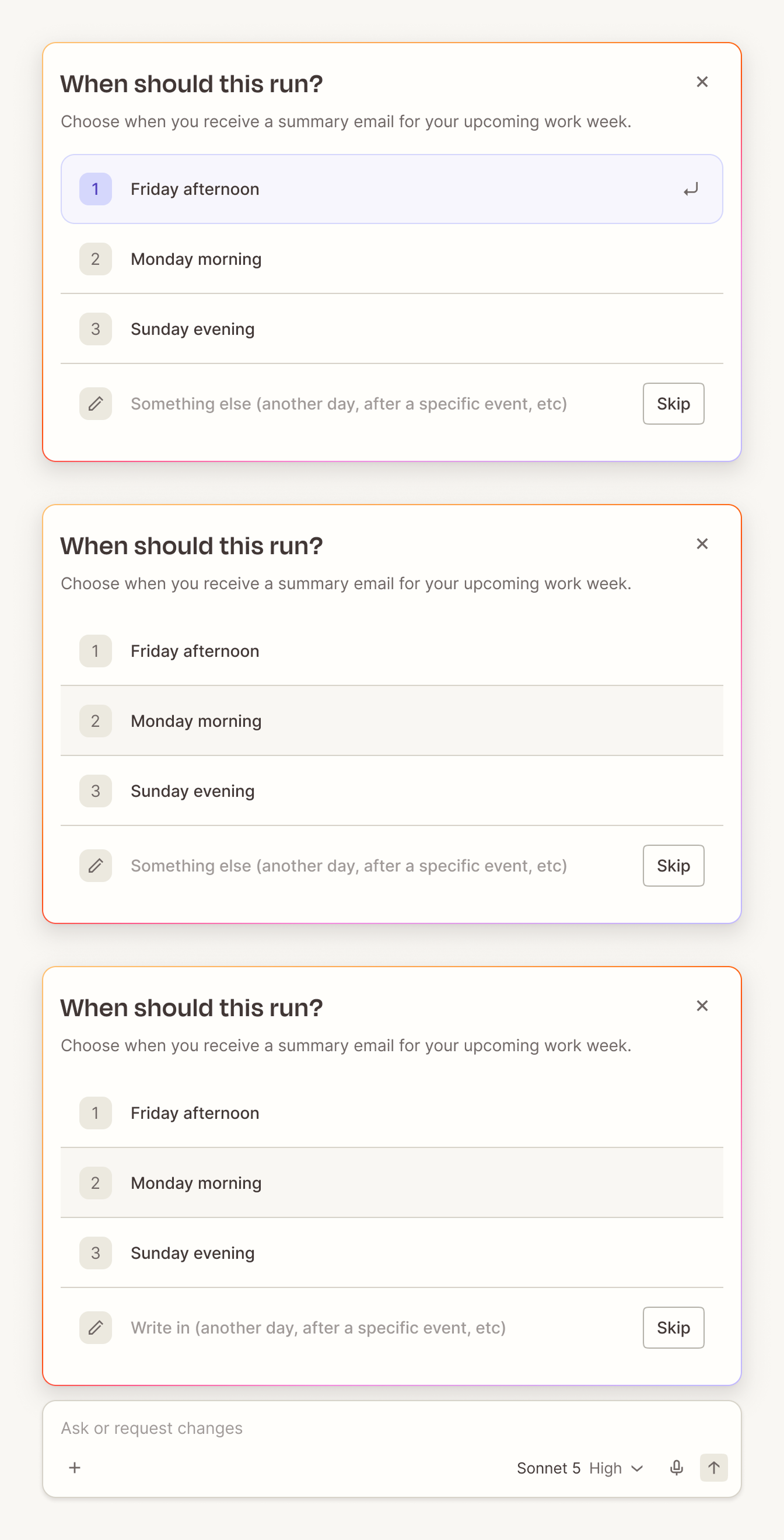
Not every AI action deserves the same degree of oversight. Some work can run quietly; other work needs confirmation, correction, or a choice before proceeding. The system needed a consistent way to pause without making every action feel risky.
Approval patterns put consequential actions in context before they run. Questionnaires let the AI request structured information when a conversational response would be ambiguous. Together they make collaboration more deliberate without forcing people to supervise every step.

05 · Useful output
Let generated work become product material.
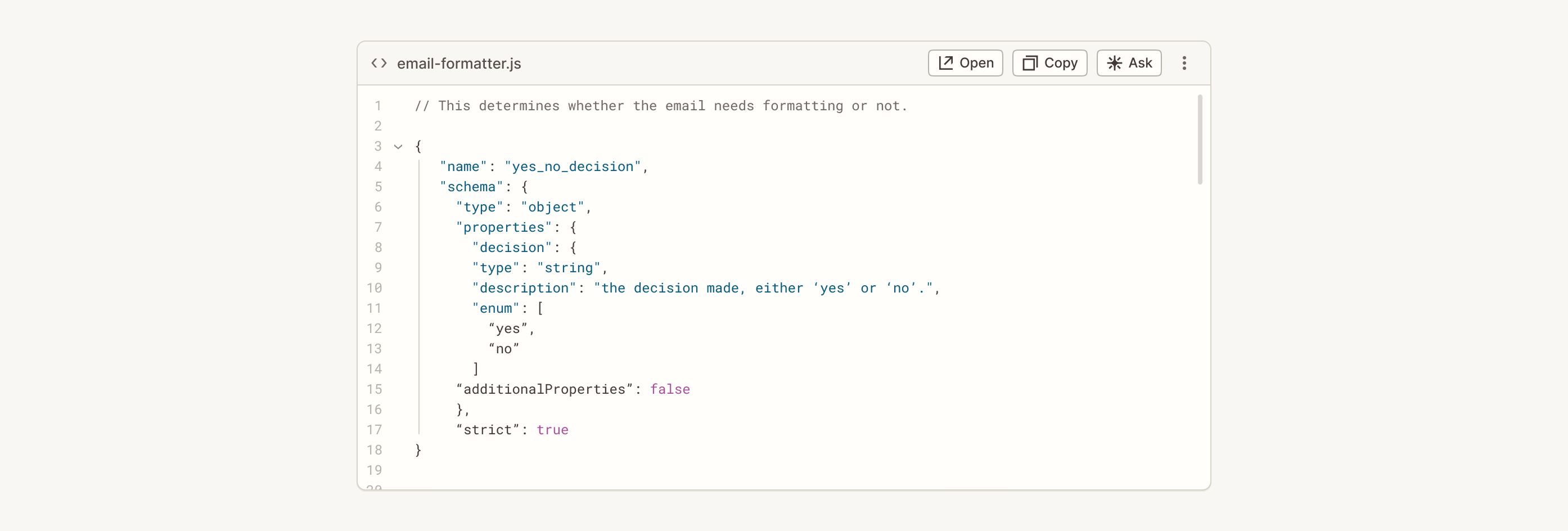
AI output is often more useful as an artifact than a message. Structured blocks make content easier to inspect, copy, edit, and apply. Preview patterns place generated changes into the product model so people can judge the result in context.
This shift—from response to material—helps teams use AI as part of a workflow rather than as a destination outside it.
06 · What the system enabled
A shared foundation for many product teams.
The pattern set gave teams a coherent starting point for common AI behaviors while keeping the system flexible enough for product-specific needs. It connected interaction guidance with concrete UI models teams could put into practice.
More than a collection of components, the work established a point of view: AI should be transparent about state, deliberate about control, and integrated into the product workflows people already understand.
- 01Use familiar product structure before inventing AI-specific chrome.
- 02Communicate state at the level people can act on.
- 03Increase human control as consequence increases.
Have a complex product problem?